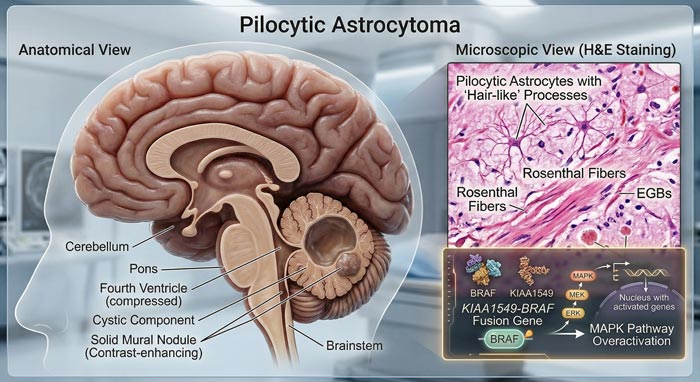

Recovery after pilocytic astrocytoma surgery usually takes four to eight weeks for daily activities. Full stamina then returns within three to six months. Generally, patients leave the hospital within three to seven days. Because the tumor is grade 1, surgery often serves as the only treatment. This guide walks through each stage. It starts with the first night in intensive care and ends with the return to school or work.
Every recovery is individual. Timelines below reflect typical experiences at experienced brain tumor centers, so they serve as a guide. Tumor location, age, and the extent of surgery all change the pace. Therefore, use this guide to set expectations. Then follow the specific instructions of your surgical team.
In This Article
- Recovery Timeline at a Glance
- Preparing for Surgery to Speed Recovery
- The First 48 Hours After Surgery
- The Rest of the Hospital Stay
- Weeks One to Four at Home
- Months Two to Six: Regaining Full Strength
- Recovery After Cerebellar (Posterior Fossa) Surgery
- What Recovery Looks Like for Children
- Common Side Effects and How Long They Last
- Rehabilitation: Physical, Occupational, and Speech Therapy
- Warning Signs That Need Urgent Attention
- The First Follow-Up MRI and Beyond
- Traveling Home After Surgery: Advice for International Patients
- Expert Insight: Prof. Dr. Serdar Baki Albayrak
- Frequently Asked Questions
Recovery Timeline at a Glance
The recovery process for pilocytic astrocytoma surgery follows a predictable sequence. Consequently, families can plan ahead for hospital time and home support. They can also arrange time away from school or work.
| Stage | Typical Duration | What Usually Happens |
|---|---|---|
| Intensive care | 1 night (sometimes 2) | Neurological checks every hour, pain control, first CT or MRI |
| Hospital ward | 3 to 7 days | Walking, eating normally, stitches or staples checked, discharge planning |
| Early home recovery | Weeks 1 to 4 | Fatigue, headaches easing, short walks, wound healing |
| Return to school or desk work | Weeks 4 to 8 | Part-time first, then full days |
| Full stamina and sports | Months 3 to 6 | Contact sports only after surgeon clearance |
| Long-term follow-up | Years | MRI at 3 months, then every 6 to 12 months |
Preparing for Surgery to Speed Recovery
In fact, recovery begins before the operation. Patients who arrive well informed, well nourished, and physically active recover faster. Therefore, we ask patients to stop smoking and keep walking daily. We also review their medication list with the anesthesia team.
For hemispheric tumors, the surgeon may start anti-seizure medication a few days in advance. For cerebellar tumors with hydrocephalus, the team sometimes places a temporary drain first. In addition, a preoperative MRI with navigation sequences lets the surgeon plan the smallest safe opening. Each of these steps shortens the hospital stay afterward.
The First 48 Hours After Surgery
Patients wake up in the recovery room or intensive care unit. Usually, this happens within an hour of the operation ending. First, nurses check strength, speech, pupils, and alertness every hour. This close observation catches rare early problems such as bleeding or swelling.
Pain is generally moderate and responds to standard medication. Many patients feel more discomfort from the neck and scalp than from inside the head. In addition, most patients receive a short course of steroids to limit swelling. Anti-nausea medication is available as needed.
Next, most centers obtain an MRI within 48 to 72 hours. This scan documents how much tumor the surgeon removed. Therefore, it becomes the baseline for every future comparison.
The Rest of the Hospital Stay
By the second day, most patients sit up, eat, and walk with assistance. Physiotherapists then begin gentle mobility work. Early walking lowers the risk of blood clots and pneumonia. So nurses encourage it even when patients feel tired.
The typical stay lasts three to five days for hemispheric tumors. Cerebellar tumors, however, usually need five to seven days. Before discharge, the team checks three things. The wound must stay dry, oral medication must control the pain, and the patient must walk safely. Families also receive instructions on wound care, medication, and warning signs.
Weeks One to Four at Home
Fatigue generally dominates the first month at home. The brain uses enormous energy to heal, so patients often need naps and early nights. Headaches are common; however, they should ease week by week rather than worsen.
Practical guidance for this stage includes:
- Wound care: Keep the incision clean and dry until the surgeon removes stitches or staples, usually at 7 to 14 days.
- Activity: Walk daily, increase distance gradually, and avoid lifting anything heavier than a few kilograms.
- Medication: Finish the steroid taper exactly as prescribed. Continue anti-seizure medication if the surgeon prescribed it.
- Screens and reading: Short sessions are fine; stop when headaches or eye strain begin.
- Driving: Do not drive until the surgeon clears you. The waiting period is longer if you had a seizure.
Most patients feel noticeably better by the end of week two, especially with daily walks. Furthermore, many describe week three as a turning point. They finally feel like themselves for part of each day.
Months Two to Six: Regaining Full Strength
Between months two and six, stamina returns and most restrictions lift. Students typically return to school on a part-time schedule around week four. Then they reach full days by week six to eight. Similarly, adults with desk jobs return around the same time. Physically demanding jobs, however, need eight to twelve weeks.
Non-contact exercise such as swimming, cycling, and jogging usually resumes after the three-month MRI. Contact sports, however, wait for explicit clearance, because the bone flap needs time to fuse. By six months, most patients report full energy and no daily reminder of the surgery.
Recovery After Cerebellar (Posterior Fossa) Surgery
Cerebellar surgery deserves separate mention because the cerebellum controls balance and coordination. Our article on cerebellar pilocytic astrocytoma covers the operation itself in detail. Consequently, patients often feel unsteady, dizzy, or clumsy during the first weeks. These symptoms improve steadily in most cases; moreover, physiotherapy speeds the process.
Two specific issues can prolong recovery after cerebellar surgery. First, hydrocephalus can persist even after tumor removal. In one 100-patient pediatric series, for example, 35 percent of children needed a permanent shunt or a third ventriculostomy.
Second, cerebellar mutism syndrome affected 15 percent of children in the same series. This syndrome causes reduced speech and emotional lability. Fortunately, both typically improve over weeks to months.
Despite these hurdles, long-term function is excellent. At final follow-up, 94 percent of those children had a good functional outcome. Our article on pilocytic astrocytoma survival rate and life expectancy covers the long-term picture in more depth.
What Recovery Looks Like for Children
Children generally recover faster than adults, but they need different kinds of support. For example, play therapists and child life specialists help young patients understand the hospital. Parents should expect clinginess, disturbed sleep, and mood swings for a few weeks. These are normal reactions to a frightening experience.
School reintegration, in turn, works best in stages. A phased return, with rest breaks and reduced homework, prevents exhaustion. In addition, teachers should know about any temporary difficulties with concentration, handwriting, or balance. Overall, most children are back to full participation within two to three months.
Children with hypothalamic or optic pathway tumors need extra monitoring of growth, hormones, and vision. Therefore, pediatric endocrinology and ophthalmology often join the follow-up team.
Common Side Effects and How Long They Last
Most side effects after pilocytic astrocytoma surgery are temporary. The table below lists the ones patients ask about most often.
| Side Effect | How Common | Typical Duration |
|---|---|---|
| Fatigue | Almost universal | 4 to 12 weeks |
| Headache | Very common | 1 to 4 weeks, easing steadily |
| Scalp numbness around the scar | Common | Months; sometimes partial permanent numbness |
| Balance problems (cerebellar surgery) | Common | Weeks to a few months |
| Word-finding or concentration difficulty | Occasional | Weeks to months |
| Seizures (hemispheric tumors) | Uncommon | Controlled with medication; often tapered later |
| Wound infection or CSF leak | Rare | Needs prompt treatment |
Persistent deficits are uncommon after pilocytic astrocytoma surgery. The tumor pushes brain tissue aside rather than invading it. Consequently, surgeons can usually remove it without harming function. Nevertheless, the risk rises for tumors in the brainstem or deep structures.
Rehabilitation: Physical, Occupational, and Speech Therapy
Rehabilitation starts in the hospital. For patients who need it, it then continues at home. Physical therapists, for instance, work on balance, walking, and strength. Occupational therapists address fine motor skills, daily tasks, and return to work or school. Speech therapists help with word finding, swallowing, or cerebellar mutism.
Not every patient needs formal therapy. However, patients who do should start early. The brain adapts fastest in the first months after surgery. Most therapy programs run for several weeks and then shift to home exercises.
Warning Signs That Need Urgent Attention
A small number of problems require immediate contact with the surgical team. Alternatively, go to an emergency department. Do not wait for a scheduled appointment if you notice any of the following:
- Fever above 38°C, or redness, swelling, or fluid leaking from the wound
- Clear fluid dripping from the nose or the incision, which may be cerebrospinal fluid
- Headache that worsens steadily or wakes you from sleep, especially with vomiting
- New weakness, numbness, vision change, or difficulty speaking
- A seizure, even a brief one
- Increasing drowsiness, confusion, or unusual irritability in a child
These signs can point to infection, hydrocephalus, or bleeding, for example. Fortunately, all of them are treatable when caught early. Consequently, families should keep the ward’s phone number within reach for the first month.
The First Follow-Up MRI and Beyond
The first outpatient MRI usually takes place around three months after surgery. This scan confirms that the resection cavity is settling and, moreover, that no tumor has regrown. After a complete resection, scans then continue every six to twelve months for several years.
If the surgeon left a small residual tumor for safety, follow-up is closer. Many residuals stay stable for years; indeed, some shrink. If a residual tumor grows, options include a second surgery, chemotherapy, or targeted therapy. We describe each option in our guide to pilocytic astrocytoma treatment.
Traveling Home After Surgery: Advice for International Patients
International patients often ask, first of all, when they can fly home. In most cases, the surgeon clears air travel about 10 to 14 days after a craniotomy. First, the wound must heal and the early MRI must look reassuring. Consequently, we advise patients to plan roughly two to three weeks in Istanbul in total.
Before departure, patients receive their imaging on disk, the pathology report, and a written follow-up plan. Their local neurologist or neurosurgeon can then continue MRI surveillance at home. Moreover, our team stays available by email and video call for questions during the first months. Our page on brain tumor treatment costs in Turkey explains what the surgical package typically includes.
Expert Insight: Prof. Dr. Serdar Baki Albayrak
Planning the Recovery Before the Operation
Prof. Dr. Serdar Baki Albayrak plans each pilocytic astrocytoma operation with recovery in mind. Neuronavigation, intraoperative monitoring, and careful cyst management reduce trauma to healthy tissue. As a result, patients spend less time in the hospital and return to normal life sooner.
“A grade 1 tumor gives us the chance to cure with one operation. So the goal is not just to remove the tumor but to do it in a way that lets the patient walk out of the hospital in a few days and forget about it in a few months.”
Prof. Dr. Serdar Baki Albayrak
Planning Surgery in Istanbul?
Our international patient team organizes the operation, hospital stay, and follow-up MRI schedule. As a result, your recovery starts on the right foot.
Frequently Asked Questions
How long does it take to recover from pilocytic astrocytoma surgery?
Most patients manage daily activities within four to eight weeks. Full stamina then returns within three to six months. Hospital stays generally last three to seven days. Cerebellar tumors and younger children sometimes need a little longer.
When can my child go back to school after brain tumor surgery?
A phased return usually starts around four weeks after surgery, beginning with half days. Most children attend full days by six to eight weeks. Teachers should allow rest breaks and reduced homework during the first month back.
Will I need chemotherapy or radiation after surgery?
Usually not. After complete removal of a pilocytic astrocytoma, doctors recommend MRI surveillance alone. Chemotherapy or targeted therapy comes into play only if a residual tumor grows. Doctors reserve radiation for the small number of cases that do not respond to other options.
Is it normal to feel extremely tired weeks after surgery?
Yes. Fatigue is the most common complaint; indeed, it can last four to twelve weeks. The brain heals slowly and uses a great deal of energy. Rest, short daily walks, good nutrition, and a gradual return to routine all help.
When can I drive again after brain surgery?
Only after your surgeon clears you, which typically takes several weeks. Regulations differ by country. Moreover, the waiting period lengthens if you experienced a seizure. Always confirm the rules for your own license.
What is cerebellar mutism syndrome and does it go away?
Cerebellar mutism syndrome is a temporary loss or reduction of speech after posterior fossa surgery. It often comes with irritability and poor coordination. It affects a minority of children, around 15 percent in one large pilocytic series. Speech typically returns over weeks to months, especially with therapy.
How soon after surgery is the first MRI?
First, surgeons obtain a baseline MRI within 48 to 72 hours of the operation. The first outpatient scan follows at about three months. After that, scans continue every six to twelve months for several years. The exact interval depends on how much tumor remains.
Conclusion: A Recovery Measured in Weeks, Not Years
Recovery after pilocytic astrocytoma surgery usually runs smoothly and relatively quickly. Most patients leave the hospital within a week and return to school or work within two months. By six months, they feel fully themselves. Because the tumor is grade 1, this recovery often marks the end of active treatment.
Therefore, the quality of the operation and the follow-up plan matter more than anything else. Learn how we approach brain tumor surgery in Istanbul for international patients. Also, explore our overview of treatment approaches for every tumor grade.
Ask About Your Recovery Plan
We answer questions about hospital stay, travel timing, and follow-up. You commit to nothing until then.
Last reviewed: September 2026 | Reviewed by: Prof. Dr. Serdar Baki Albayrak, Neurosurgeon
Disclaimer: This article is provided for informational purposes only and does not constitute medical advice. Survival and outcome statistics represent published group averages and cannot predict any individual outcome. This content is not a substitute for professional diagnosis or treatment. Always consult Prof. Dr. Serdar Baki Albayrak or another qualified physician directly regarding any medical condition, symptoms, or treatment decisions.